


When you think of French martial arts, Savate (French kickboxing) often comes to mind. But hidden in the shadow of the boxing ring is its sophisticated, lightning-fast cousin: Canne de Combat.
Part fencing, part dance, and entirely tactical, Canne de Combat is a unique combat sport that turns a simple chestnut wand into a whirlwind of precision. Whether you are a history buff, a martial artist, or someone looking for a dynamic new hobby, here is everything you need to know about the "French Art of the Cane."
What exactly is the "Canne"?
In this sport, the weapon is a tapered stick made of chestnut wood. It measures 95 cm in length and is surprisingly light (about 100–120 grams). It has a slight cone shape: 1.5 cm diameter at the tip and 1.8 cm at the base (the "heel").
Because it is so light, the sport doesn't rely on brute strength. Instead, it’s about speed, centrifugal force, and movement.
The Rules: A Game of Strategy and Courtesy
A competitive match, known as an assault, takes place inside a 9-meter circle. Two "tireurs" (shooters/fencers) face off for bouts usually lasting 2 or 3 minutes. The goal is simple: "Touch without being touched."
However, you can't just swing wildly. Canne de Combat is strictly codified by three main technical requirements:
The Armé (Arming): Every strike must be "armed" by bringing the hand behind the line of the shoulders before the hit. This prevents short, "pecking" movements and ensures every blow is wide and visible.
The Rotation: Every strike must involve a rotation of the cane to generate speed.
The Targets: Points are only scored if you hit one of three zones: the head, the torso (flank), or the lower leg (shins).
The Six Secret Strikes
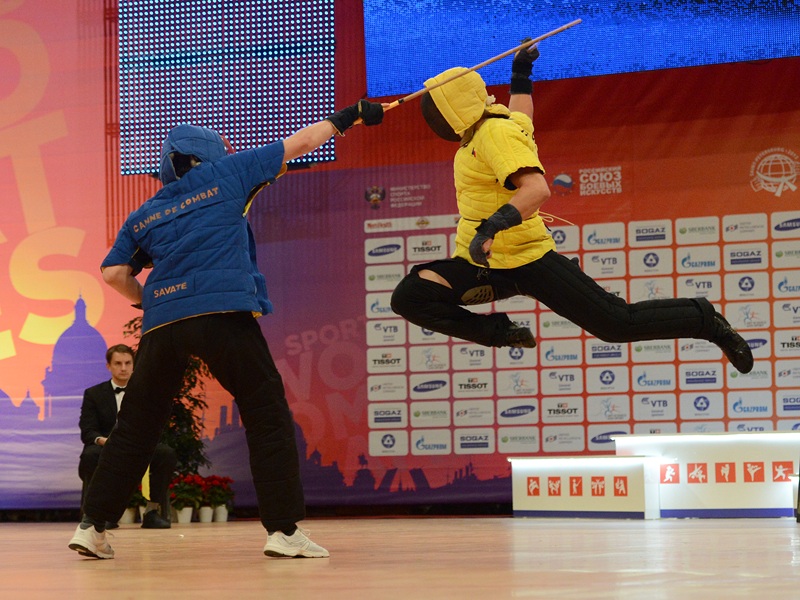
In competition, only six movements are permitted. While that sounds limited, the combinations are endless when you add jumps, lunges, and voltes (360-degree spins).
Brisé: A vertical strike to the head.
Croisé Tête: A cross-strike to the head.
Latéral Extérieur: A side strike (outward).
Latéral Croisé: A side strike (inward/crossed).
Enlevé: An upward strike starting from the bottom.
Croisé Jambe: A cross-strike to the legs.
From the Streets of Paris to the Modern Gym
The history of the cane is a fascinating mirror of French society. In the 19th century, carrying a sword was no longer socially acceptable for the "bourgeoisie" in the city. The walking cane became their tool for self-defense. Meanwhile, in the countryside, peasants used the Bâton (a longer, heavier staff) for protection.
By the early 20th century, Canne was taught to the famous "Brigades du Tigre" (the first motorized police force in France). However, the sport nearly vanished after World War I as fashions changed and walking sticks fell out of style.
We owe the modern version of the sport to Maurice Sarry, who in the late 1970s codified the rules we use today. He transformed a street-fighting method into a beautiful, athletic sport based on respect, aesthetics, and tactical intelligence.
Why Try Canne de Combat?
Total Body Workout: The constant shifting, lunging, and spinning provide incredible cardio and coordination training.
It’s a "Chess Match": Because you must arm every blow, you have to use feints and clever footwork to trick your opponent.
Safety First: In competition, practitioners wear padded tunics, fencing masks, and shin guards. It is very safe and highly accessible for children.
Gender Neutral: Because it relies on speed rather than power, men and women often train and compete together on equal footing.
Are you ready to pick up the stick? Canne de Combat is more than just a sport; it is a living piece of French heritage that keeps your mind sharp and your body moving.